Lev Landau
1908–1968 · Baku
Soviet theoretical physicist, Nobel laureate for the theory of superfluidity
3 stamps · 3 countries
One life, many countries
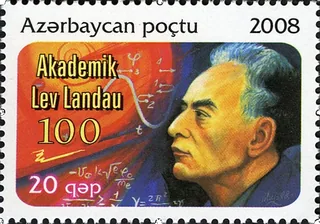 2008Azerbaijan
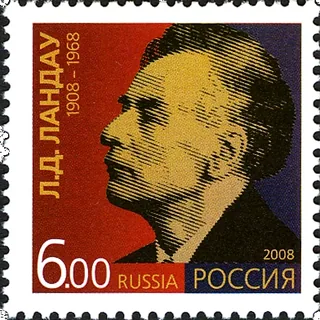 2008Russia
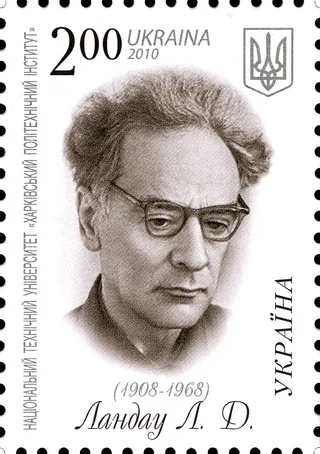 2010Ukraine
Lev Davidovich Landau was born in 1908 in Baku to a Jewish family and became one of the greatest theoretical physicists of the twentieth century. Colleagues called him Dau, and he was among the last scientists to work with mastery across virtually every branch of physics. He laid the foundations of modern condensed matter physics and developed theories of diamagnetism, second-order phase transitions and Fermi liquids, as well as a theory of superconductivity with Vitaly Ginzburg; a damping effect in plasmas also bears his name. In 1962 he received the Nobel Prize in Physics for his theory of superfluidity, which explained the strange behaviour of liquid helium near absolute zero. An academician from 1946, he founded a celebrated school and, with Evgeny Lifshitz, wrote the famous Course of Theoretical Physics. He died in Moscow in 1968.
Facts checked against Wikipedia ↗